

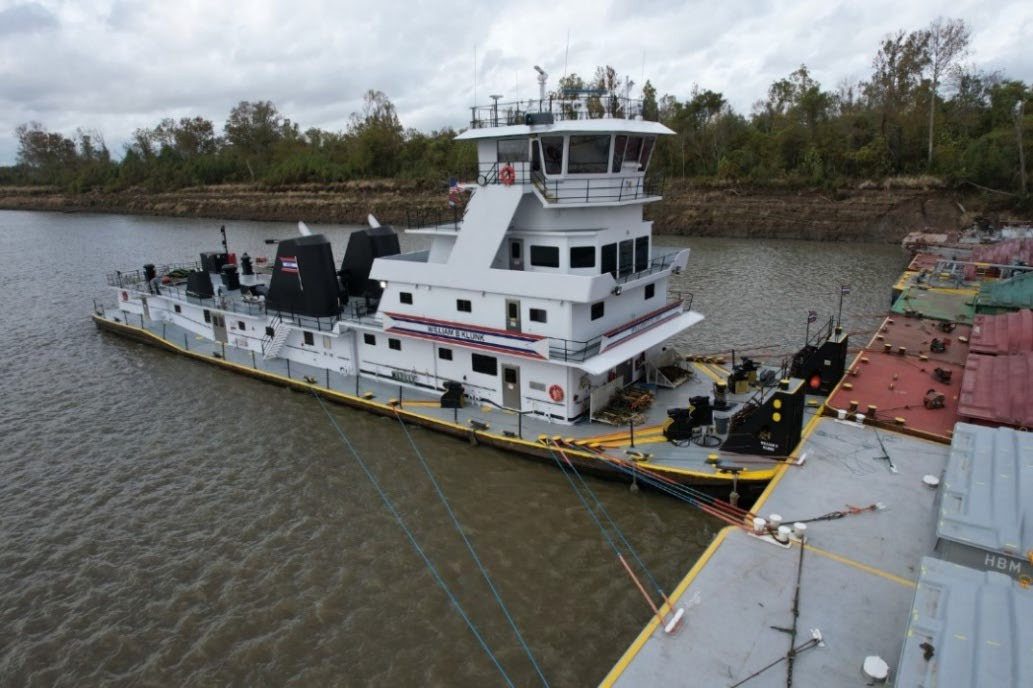
An NTSB report has revealed that a towboat pilot’s fatigue and use of a personal cell phone led to a dramatic collision involving 22 hopper barges on the Lower Mississippi River near Baton Rouge. The incident occurred on April 17, 2024, when the vessel William B. Klunk struck moored barges in a fleeting area.
Investigators found that in the six minutes preceding the collision, the pilot failed to make any rudder or throttle adjustments. Just 40 seconds before impact, onboard video showed the pilot using his personal phone instead of monitoring the vessel’s position. In addition, records indicate he engaged in non-operational conversations—for example, texting and an administrative call—while on duty.
Fatigue was also a critical factor. The pilot had received only about four hours of sleep in the prior 36 hours and had been awake for nearly 18 hours at the time of the incident. The NTSB highlighted how fatigue diminishes attention, vigilance, and multi-tasking—making distractions like phone use far more dangerous.
The crash resulted in thirteen barges from the tow and three moored barges breaking loose, causing approximately $810,000 in damage to vessels, infrastructure, and shore equipment. At least one crewmember from a recovery tug suffered minor injuries during the incident.
🌍 Wider Context
This latest report is part of a troubling pattern of accidents linked to crew fatigue and electronic-device distractions in inland and coastal navigation. Previous NTSB investigations have shown similar scenarios involving phone use at critical moments—such as collisions with piers and other vessels.
The board has emphasized that operators should implement strict policies prohibiting non-operational phone activity during navigation, and that crew scheduling should prioritize adequate rest to prevent fatigue-induced errors.